
GEO vs SEO vs AEO: Which Digital Marketing Strategy Should Your Business Prioritize in 2026

GEO vs SEO vs AEO: Which Digital Marketing Strategy Should Your Business Prioritize in 2026

Search has changed more in the last two years than it did in the previous decade. The query bar is still there, but what happens after someone types into it looks nothing like it used to. If your digital marketing strategy still treats Google as a simple list of blue links to compete for, you are already playing catch-up. The conversation in 2026 centers on three overlapping disciplines: GEO vs SEO vs AEO. Understanding what separates them, and what connects them, is now a genuine business decision, not a technical footnote.

Three Terms, One Shifting Search Landscape

Before getting into priorities, it helps to be clear about what each term actually means in practice.

SEO (Search Engine Optimization) is the oldest of the three. It covers everything you do to earn visibility in traditional search engine results: technical site health, on-page content quality, backlinks, and structured data. It is still the bedrock of organic discoverability.

AEO (Answer Engine Optimization) emerged as voice search and featured snippets grew in prominence. The goal is to structure your content so that search engines and AI assistants can lift a precise, direct answer from your page and surface it immediately, often without a click.

GEO (Generative Engine Optimization) is the newest frontier. It focuses on making your content credible, citable, and structured enough to be referenced inside AI-generated responses, the kind produced by ChatGPT, Perplexity, or Google’s AI Overviews. GEO is less about ranking and more about being the source an AI trusts when it composes an answer on your topic.

What is the difference between GEO, SEO, and AEO?

SEO helps your content rank in traditional search results. AEO optimizes your content to be pulled as a direct answer by AI assistants and voice search tools. GEO goes a step further, structuring your content so it gets cited or surfaced inside AI-generated responses from tools like ChatGPT, Perplexity, and Google’s AI Overviews. They are related, but each requires a distinct approach.

Why This Distinction Matters More in 2026 Than It Did in 2024

The shift is not theoretical. AI-powered search features now intercept a meaningful portion of queries before a user ever scrolls to the organic results. For informational and research-heavy searches, which dominate B2B buying behavior, AI Overviews and generative answers are frequently the first and only thing a prospect reads.

That changes the competitive dynamic entirely. You can rank on page one and still be invisible if the AI summary above your result cites a competitor instead of you. As Insight Boutique notes in their 2026 search outlook, businesses that treat SEO, AEO, and GEO as separate silos will struggle to maintain visibility as generative answers become the default interface for many search sessions.

The implication for marketing strategy is real and immediate: you cannot ignore any of the three, but you also cannot invest equally in all of them at once. Knowing which to prioritize first is where most businesses get stuck.

Start With SEO, Because Everything Else Builds on It

There is a temptation to chase the newest thing. GEO sounds more exciting than fixing crawl errors or improving page speed. But AEO and GEO both depend on one foundational fact: AI systems and search engines can only surface content they can find, read, and trust. That means your SEO fundamentals need to be solid first.

If your site has serious technical problems, thin content, or no credible backlink profile, no amount of GEO-focused restructuring will make an AI engine choose to cite you. The technical groundwork matters more than ever. Our breakdown of how to identify and fix technical SEO issues covers the specific problems that block crawlers and AI systems alike from properly indexing your content.

Think of SEO as the plumbing. Nobody sees it. But without it, nothing else in the house works.

Which SEO Signals Matter Most for AEO and GEO Readiness?

Not all SEO work translates equally into AEO or GEO benefit. The areas with the highest crossover value right now are:

  • Clear, well-structured content with explicit answers to specific questions
  • Proper use of schema markup and structured data
  • Strong internal linking that signals topical authority across your site
  • High-quality, credible backlinks that build domain trust
  • Fast load times and clean mobile rendering, since AI crawlers follow the same technical rules as Googlebot

If your internal link architecture is fragmented, AI systems will struggle to understand the depth of your expertise on any given topic. A structured internal linking audit, like the process outlined in our guide to auditing your B2B website’s internal linking strategy, is one of the highest-leverage moves you can make for both traditional SEO and generative engine visibility at the same time.

When AEO Should Move Up Your Priority List

Once your technical foundation is solid, AEO deserves real attention, particularly if your buyers use voice search, AI assistants, or tend to ask conversational, question-based queries.

AEO is fundamentally about clarity. It rewards content that answers a specific question in a direct, concise way, ideally in the first sentence or two after the question is raised. Featured snippets, People Also Ask boxes, and AI-generated answer cards all pull from the same type of well-organized, question-aware content.

For B2B service businesses especially, where buyers often search for answers to specific problems before they ever search for a vendor, AEO content can put your brand in front of a potential client weeks or months before they are ready to request a proposal.

Should a B2B business prioritize SEO, AEO, or GEO in 2026?

For most B2B businesses in 2026, the answer is not one or the other. SEO remains the foundation because it drives crawlable, indexable authority. AEO captures the growing share of voice and zero-click searches. GEO ensures your brand surfaces inside AI-generated answers, where a growing segment of your buyers now start their research. The right balance depends on your audience, your sales cycle, and your current content maturity.

GEO: The Discipline Most Businesses Are Ignoring Right Now

GEO is where the gap between early movers and everyone else is widest right now. Most businesses have not started thinking about it deliberately, which means the window for competitive advantage is still open, but it will not stay open indefinitely.

Generative Engine Optimization is not a set of tricks. It is a shift in how you think about the purpose of your content. The goal moves from “rank for this keyword” to “be the most credible, specific, well-structured source an AI would choose to cite when answering this question.”

Practically, that means writing with authority and depth rather than covering topics at a surface level. It means citing credible sources, using precise language, and organizing your content so that both a human reader and an AI parsing engine can immediately identify what question is being answered and what the answer is.

What GEO-Optimized Content Actually Looks Like

A GEO-ready piece of content typically has a few recognizable characteristics. It leads with the most important information rather than burying it. It uses descriptive subheadings that match the language someone would use when asking a question. It supports claims with specifics rather than vague generalities. And it demonstrates genuine expertise, the kind that comes from actually working in the field rather than summarizing what someone else already wrote.

This is precisely why the shift toward AI-driven digital marketing strategies is not just about tools and automation. It is about content that earns trust at the source level. Our piece on how AI-driven digital marketing strategies are helping B2B brands win in 2026 explores this dynamic in more depth, including how businesses are restructuring their content operations to account for generative search.

How to Decide What to Prioritize First

The right prioritization is not the same for every business. A few questions help clarify where to focus your energy.

How healthy is your technical SEO right now? If you have never run a proper audit, that is where the effort goes first. Visibility problems at the technical level will undermine everything else.

What is your buyers’ search behavior? If your prospects tend to ask specific, conversational questions early in their research process, AEO content can deliver pipeline value quickly. If they tend to ask AI tools for vendor recommendations or industry overviews, GEO readiness becomes the more pressing gap.

How mature is your existing content? If you have substantial content already published but it is not well-structured for direct answers or AI citation, a content audit and restructure may deliver faster returns than producing new content.

A disciplined 90-day planning approach, the kind covered in our guide to building a 90-day digital marketing plan for a B2B service business, is a practical way to sequence these priorities without trying to do everything simultaneously and spreading resources too thin.

The Integration Problem Most Businesses Miss

Here is the real issue underneath the GEO vs SEO vs AEO debate: most businesses treat these as separate projects assigned to separate people. SEO goes to the technical team. Content goes to the writers. AI strategy becomes a side conversation for leadership. The result is a fragmented presence that impresses none of the engines it needs to impress.

The businesses gaining ground in 2026 are the ones treating search visibility as a single, integrated system. Technical health, content authority, answer clarity, and generative credibility all feed the same outcome: being the source your buyers encounter first, regardless of where they start their search.

That kind of integration requires a clear strategy, honest assessment of your current gaps, and the discipline to close them methodically rather than chasing whichever trend generated the most noise last month.

If you are not sure where your business currently stands across these three dimensions, a structured digital marketing audit is usually the clearest place to start. The process of evaluating what you have, what is working, and what is actively holding your visibility back gives you a real baseline, which is the only reliable foundation for deciding what to prioritize next.

The search landscape in 2026 rewards businesses that understand the full picture. GEO, SEO, and AEO are not competing philosophies. They are sequential layers of the same goal: making sure that when your buyer is looking for what you do, they find you first, whether that is in a ranked result, a featured answer, or an AI-generated summary that names you as the authority worth listening to.
How to Build a 90-Day Digital Marketing Plan for a B2B Service Business

How to Build a 90-Day Digital Marketing Plan for a B2B Service Business

Most B2B service businesses don’t have a marketing problem. They have a planning problem. The website exists, a LinkedIn profile is active, maybe some blog posts have been published here and there, but none of it connects into something that actually moves the needle on pipeline.

A 90-day digital marketing plan solves that by forcing a short enough horizon to stay focused, but a long enough runway to see real results. If you’ve been stuck in reactive mode, this is the framework that changes that.

Why 90 Days Is the Right Unit of Planning

Quarterly planning sits at a genuinely useful intersection. A 30-day plan rarely gives you enough time to see whether a campaign or a content push is actually working.

A full-year plan almost always becomes theoretical by month three, when the market shifts or a key hire changes your service offering. Ninety days forces real prioritisation. You can’t do everything, so you have to choose what matters most right now.

For B2B service businesses specifically, the sales cycle adds another reason this window makes sense. A prospect who discovers you in week one of your plan may well convert into a conversation by week ten or eleven, which means the work you do in month one genuinely feeds the results you measure at the end of month three. That lag is worth building into your expectations from the start.

Dave Chaffey’s definition of 90-day marketing plans frames them as a way to create organisational alignment and reduce wasted effort, which is exactly right for service businesses where the founder or a small team is often wearing too many hats to sustain unfocused activity for long.

Before You Write a Single Goal: Do the Audit

The single most common mistake in building any marketing plan is skipping straight to tactics. Before you decide you need more LinkedIn content or a paid search campaign, you need an honest picture of what you’re starting with.

Run a proper website audit. Look at where your organic traffic is actually coming from, which pages have real engagement and which ones leak visitors immediately, and whether your calls to action are working. Our breakdown of what an SEO audit should include covers the technical and content layers worth reviewing here.

Beyond the website, audit your competitive position. Know who ranks for the terms your buyers actually search, and where you have a realistic shot at visibility versus where you’re fighting a losing battle.

A competitive SEO analysis should inform which content you prioritise in months one through three, not serve as an academic exercise. Then look at your existing content honestly: what’s earning attention, what’s been ignored, and what’s outdated enough to be doing more harm than good.

Setting Goals That Connect to Revenue

The goals in a B2B digital marketing plan need to trace back to real business outcomes, not vanity metrics. More website visitors is not a goal. More qualified discovery calls booked from inbound channels is a goal. More LinkedIn followers is not a goal. More responses to your outreach that convert to scheduled conversations is a goal.

For a 90-day plan, three to five concrete, measurable goals is the right number. Any fewer and the plan isn’t ambitious enough to change anything. Any more and you won’t resource them properly. A useful structure for each goal is: the metric, the current baseline, the 90-day target, and the channel or tactic responsible for moving it.

For example: a service business that currently books two inbound leads per month might set a 90-day goal of reaching five per month by combining an SEO-driven content push with a LinkedIn outreach sequence. That’s specific enough to plan against and honest enough to be achievable.

The Three-Phase Structure

Month One: Foundations and Signals

The first 30 days are not glamorous. This is where you fix what’s broken, establish the tracking you’ll need to make decisions in months two and three, and publish the first wave of content.

If your website has conversion issues, a slow load time, or a contact page that works poorly on mobile, fixing those things will quietly compound every other activity you do later. Our guide on optimising your website to increase conversions is a practical starting point for that work.

Set up your analytics properly if they aren’t already. That means goal tracking in Google Analytics, UTM parameters on any links you distribute, and a baseline snapshot of your current rankings for the keywords you care about. None of this is optional if you want to make evidence-based decisions at day 60 and day 90.

Content-wise, aim for two to three long-form pieces that target specific search terms your buyers use when they’re researching solutions, not just looking for your company name. These won’t rank immediately, but they’ll be earning authority by the time month three arrives.

Month Two: Activation and Outreach

Month two is where the plan starts to feel like real marketing. Your foundations are in place, your early content is indexed, and now you layer in active outreach and distribution.

For most B2B service businesses, this means a structured LinkedIn presence, direct outreach to a defined prospect list, and possibly a lead magnet or email nurture sequence for people who aren’t ready to buy yet.

LinkedIn deserves particular attention here. The platform has become genuinely important for B2B services, not as a place to broadcast, but as a place to build a visible point of view over time.

Consistent posting, direct engagement with the right people, and a clear service proposition on your profile all work together. The tactical depth of what that looks like is covered in this guide to using LinkedIn for business expansion.

Email is frequently underused by B2B service businesses. If you have any kind of list, even a small one built from past clients, referral contacts, and event connections, a simple monthly or fortnightly email that demonstrates your thinking is one of the highest-ROI activities available to you. It keeps you visible to warm audiences without the algorithm dependency that social channels carry.

Month Three: Optimise, Double Down, and Measure

By month three, you have actual data. Use it. Which content pieces are attracting the right visitors? Which outreach sequences are generating replies? Which channels are producing conversations that actually progress?

The temptation at this stage is to keep adding new activities, but the higher-leverage move is almost always to improve what’s already showing early signs of working rather than chasing something new.

Review your initial goals against real numbers. If you’re ahead of the target on organic traffic but behind on lead conversion, the problem is probably on the website or in how clearly you’re communicating your offer, not in the volume of traffic you’re generating.

If outreach is generating replies but they’re not converting to calls, the issue is likely in the pitch or the targeting, not the channel.

Month three is also when you plan the next quarter. The best 90-day plans end with a decision, not a summary: which two or three things performed well enough to expand, and which ones do you stop doing to free up resource for what’s working.

The Channels Worth Prioritising in B2B Services

Not every digital channel is equally valuable for a service business selling to other businesses. Here’s an honest ranking based on consistent patterns across B2B service contexts.

Organic search is slow but compounding. Content that ranks well brings qualified visitors for months or years without ongoing spend. The catch is that it takes time, which is exactly why it belongs in month one of a 90-day plan rather than month three.

LinkedIn is the most direct channel to decision-makers in most B2B categories. The combination of organic content and direct outreach gives you both inbound and outbound exposure in one place.

Email to existing and warm contacts remains one of the most underrated tools in the B2B kit. Most service businesses are sitting on relationship capital they’re not activating.

Referral and partnership activity doesn’t always feel like digital marketing, but in B2B services it’s often the highest-converting source of new business.

A deliberate effort to stay visible with past clients and complementary service providers belongs in any serious 90-day plan.

Paid channels, whether search ads or LinkedIn ads, can accelerate results but generally require a working funnel underneath them to convert well.

Turning on paid spend before your website converts and before you understand your messaging is usually a way to get fast feedback that something is broken, which is useful but expensive.

What Does a 90-Day Digital Marketing Plan Actually Look Like in Practice?

A real 90-day plan for a B2B service business is a working document, not a polished presentation. It contains: the audit findings, the three to five goals with baselines and targets, a month-by-month activity list with owners and deadlines, a content calendar for the quarter, and a simple dashboard of the metrics you’ll review weekly.

That’s it. Anything more elaborate tends to become something you present and then file rather than something you actually use.

The format matters less than the discipline of reviewing it regularly. Weekly check-ins against the key metrics, a mid-quarter review at the six-week mark, and a full retrospective at day 90 are the operating rhythm that makes the plan useful rather than decorative.

How Long Does It Take to See Results from a B2B Digital Marketing Plan?

This is one of the most common questions B2B service business owners ask before committing to a structured plan, and it deserves a direct answer.

Most businesses start seeing meaningful signals, increased website engagement, inbound enquiries, or positive responses to outreach, within the first 45 to 60 days of a well-executed plan.

Tangible pipeline impact, meaning actual sales conversations that trace back to the marketing activity, typically emerges between day 60 and the end of the quarter, though this varies based on your average sales cycle length.

Businesses with longer sales cycles may see the full commercial impact of their first 90-day plan reflected in the following quarter’s numbers rather than within the plan period itself.

Building the Plan You’ll Actually Execute

The single biggest predictor of whether a 90-day marketing plan produces results is not the sophistication of the strategy. It’s whether the plan gets executed consistently.

That sounds obvious, but most small and mid-sized B2B service businesses underestimate how much bandwidth real marketing activity requires, especially when it’s being managed alongside client delivery.

Build the plan around the time and resource you actually have, not the time you wish you had. A focused plan that executes three things well will outperform an ambitious plan that executes eight things poorly every time.

If internal capacity is the genuine constraint, that’s when bringing in an outside partner to handle the execution, whether for content, SEO, or LinkedIn management, makes the most direct commercial sense.

If you’re ready to start building a plan that’s grounded in how your specific business generates leads and closes clients, get in touch with the team at Arms Digital to talk through where to focus first.

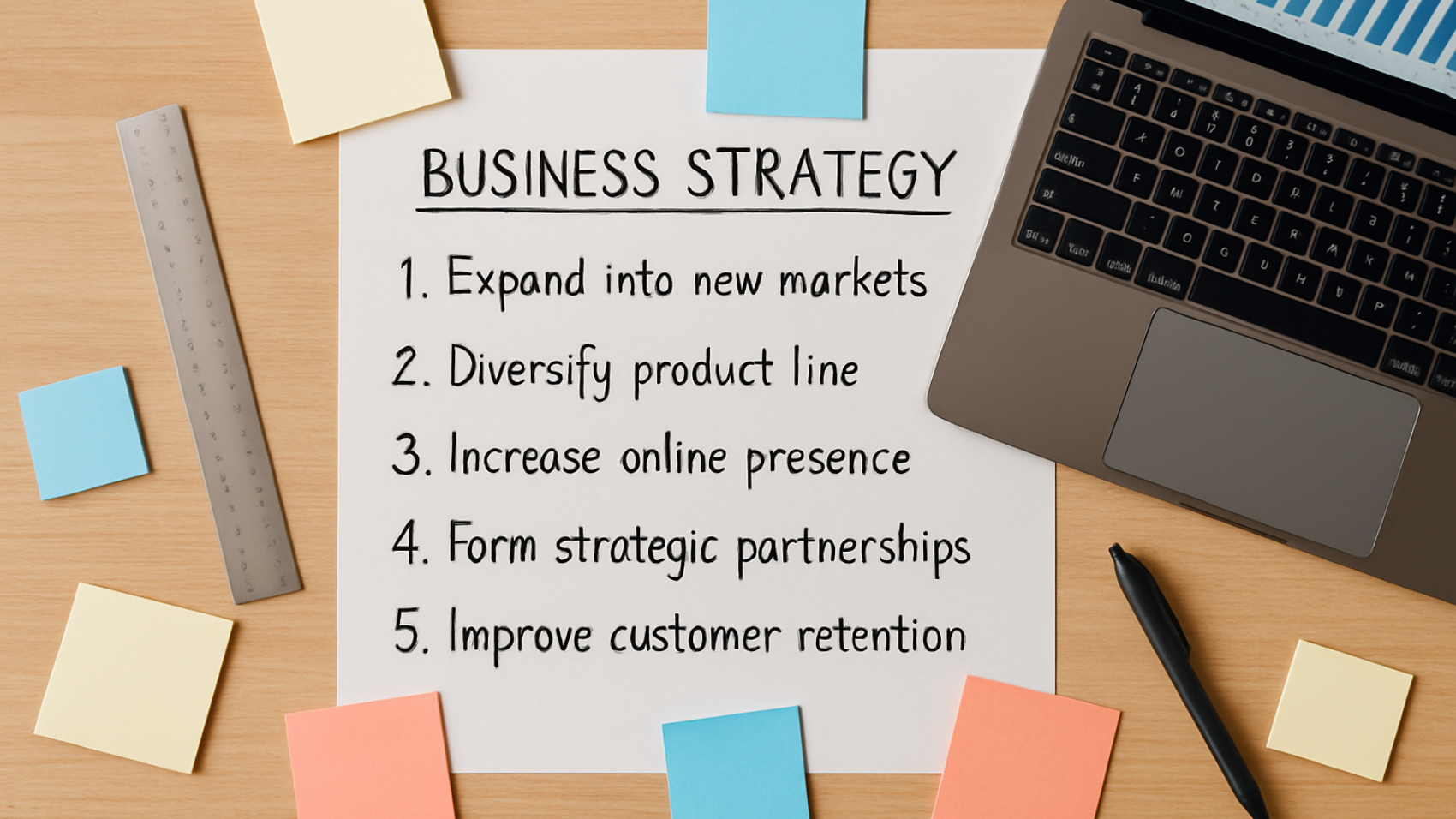
Top-down view of a numbered business growth strategy list on paper surrounded by colourful sticky notes and a partially visible laptop with a bar chart on a wooden desk.

10 Proven Strategies to Grow Your Business

10 Proven Strategies to Grow Your Business

Growing a business requires a multifaceted approach. Here are ten proven strategies that can facilitate growth:

1. Develop a clear business plan that outlines your goals, target market, and strategies.
2. Invest in marketing by diversifying channels to reach a wider audience.
3. Enhance your product or service offerings based on market trends and consumer feedback.
4. Implement a customer loyalty program to retain existing clients.
5. Utilize technology to automate processes and increase efficiency.
6. Expand your sales team and invest in training for better performance.
7. Explore new markets by identifying untapped demographics or geographic regions.
8. Leverage social media to engage with customers and promote your brand.
9. Network and build relationships with other businesses for collaboration opportunities.
10. Continuously assess and adapt your strategies based on performance metrics and market changes.

5 Essential Tips for Small Business Growth

Small businesses often face unique challenges, but growth is achievable with the right strategies. Here are five essential tips:

1. Focus on your niche market to establish a strong brand presence.
2. Prioritize customer service to enhance satisfaction and encourage referrals.
3. Keep a close eye on your financials to ensure sustainable growth.
4. Utilize local SEO to improve online visibility and attract nearby customers.
5. Seek mentorship or join local business groups for support and advice.

How to Leverage Social Media for Business Expansion

Social media serves as a powerful tool for business expansion. To leverage it effectively:

1. Create engaging content that resonates with your target audience.
2. Use paid advertising on platforms like Facebook and Instagram to reach a broader audience.
3. Engage with followers by responding to comments and messages promptly.
4. Collaborate with influencers to tap into their follower base.
5. Analyze social media metrics to refine your strategy and improve engagement.

The Power of Networking: Growing Your Business Through Connections

Networking is essential for business growth. Building connections can lead to new opportunities, partnerships, and insights. Attend industry events, join professional organizations, and engage with peers online. Remember, relationships built on trust and mutual benefit can significantly impact your business trajectory.

7 Innovative Marketing Tactics to Boost Your Business

Staying ahead in the competitive market requires innovative marketing tactics. Consider these seven strategies:

1. Create interactive content such as quizzes or polls to engage your audience.
2. Host webinars or workshops to showcase your expertise and attract leads.
3. Develop referral programs to incentivize existing customers to bring in new clients.
4. Utilize video marketing to tell your brand story effectively.
5. Implement guerilla marketing tactics for a bold and memorable impact.
6. Use personalized email campaigns to nurture leads and retain customers.
7. Collaborate with other brands for co-marketing opportunities.

How to Create a Scalable Business Model

A scalable business model allows for growth without a corresponding increase in costs. To create one:

1. Automate processes where possible to reduce manual workload.
2. Standardize operations to maintain quality as you grow.
3. Invest in technology that supports scalability, such as cloud solutions.
4. Build a strong supply chain that can adapt to increased demand.
5. Focus on customer acquisition strategies that can be replicated easily.

Understanding Customer Needs: The Key to Business Growth

Customer needs are the foundation of business growth. Conduct regular market research to identify evolving preferences. Engage with customers through surveys and feedback forms to gain insights. Tailoring your offerings to meet these needs can enhance customer satisfaction and drive loyalty.

The Role of Customer Feedback in Business Development

Customer feedback is invaluable for refining products and services. Establish multiple channels for customers to share their opinions, such as online reviews and social media. Regularly analyze this feedback to identify areas for improvement and implement changes that resonate with your audience.

Maximizing Your Online Presence for Business Growth

A strong online presence is crucial for growth in today’s digital landscape. Optimize your website for search engines and ensure it is mobile-friendly. Utilize social media platforms to engage with your audience and share valuable content. Consider investing in digital marketing strategies such as PPC advertising to drive traffic to your site.

How to Use Data Analytics to Drive Business Success

Data analytics can provide valuable insights into your business operations. By tracking key performance indicators (KPIs), you can identify trends and make informed decisions. Use analytics tools to monitor customer behavior, sales patterns, and marketing effectiveness, allowing you to adjust strategies for better results.

5 Ways to Improve Your Sales Funnel

Optimizing your sales funnel is essential for converting leads into customers. Here are five ways to improve it:

1. Clearly define your target audience to tailor messaging effectively.
2. Create compelling content that addresses potential customer pain points.
3. Utilize lead magnets, such as free trials or e-books, to capture leads.
4. Nurture leads through personalized follow-ups and targeted email campaigns.
5. Analyze funnel metrics to identify drop-off points and refine your approach.

Building a Strong Brand Identity for Sustainable Growth

A strong brand identity helps differentiate your business in a crowded market. Start by defining your brand values and mission. Create a consistent visual identity and messaging across all platforms. Engage with your audience authentically to foster loyalty and trust.

The Importance of Financial Management in Business Expansion

Effective financial management is critical for expansion. Keep detailed records of income and expenses to maintain cash flow. Create budgets and forecasts to plan for future growth. Regularly review your financial health to make informed decisions about investments and scaling operations.

How to Foster a Growth Mindset in Your Team

A growth mindset encourages employees to embrace challenges and learn from failures. Promote a culture of continuous learning by providing training and development opportunities. Encourage open communication and collaboration to inspire innovation and creativity within your team.

Exploring New Markets: Strategies for Business Expansion

When considering expansion into new markets, conduct thorough research to understand local demand and competition. Tailor your offerings to meet the specific needs of the new audience. Develop a strategic marketing plan that resonates with local consumers and consider partnerships with local businesses.

Creating Strategic Partnerships for Business Growth

Strategic partnerships can enhance your business’s reach and resources. Identify potential partners whose strengths complement your own. Establish clear objectives and mutual benefits to ensure a successful collaboration. Regularly evaluate the partnership to maximize its effectiveness.

6 Steps to Effective Business Planning

An effective business plan serves as a roadmap for growth. Follow these six steps:

1. Define your vision and mission statements.
2. Conduct a SWOT analysis to identify strengths, weaknesses, opportunities, and threats.
3. Set specific, measurable goals for your business.
4. Outline strategies to achieve your goals, including marketing and operations.
5. Create a financial plan that includes budgets and forecasts.
6. Regularly review and adjust your business plan based on performance and market changes.

The Impact of Technology on Business Growth

Technology continues to transform how businesses operate. Embrace digital tools to streamline processes, improve communication, and enhance customer engagement. Consider adopting e-commerce platforms to expand your sales channels and explore automation solutions to increase efficiency.

How to Enhance Customer Experience to Drive Sales

Enhancing the customer experience is crucial for driving sales. Focus on providing personalized interactions, quality service, and seamless transactions. Gather customer feedback to identify pain points and implement changes that improve satisfaction. A positive experience encourages repeat business and referrals.

4 Key Metrics to Measure Your Business Growth

To effectively measure business growth, track these four key metrics:

1. Revenue Growth: Analyze year-over-year revenue increases to assess financial health.
2. Customer Acquisition Cost: Calculate the cost of acquiring new customers to evaluate marketing effectiveness.
3. Customer Lifetime Value: Understand the long-term value of a customer to inform retention strategies.
4. Profit Margin: Monitor profit margins to ensure your business remains sustainable and profitable.

By implementing these strategies and focusing on continuous improvement, businesses can achieve sustainable growth and success in an ever-evolving market.

Understanding the Different Types of Social Media Marketing Agencies

Understanding the Different Types of Social Media Marketing Agencies

Social media marketing has become an essential component of modern business strategies, and with its rise, a variety of agencies have emerged to help brands navigate this complex landscape. Understanding the different types of social media marketing agencies can help businesses choose the right partner to meet their specific needs.

Full-Service Social Media Marketing Agencies

Full-service social media marketing agencies offer a comprehensive range of services that cover all aspects of social media strategy. This includes content creation, community management, paid advertising, influencer marketing, and analytics. These agencies tend to work with larger brands or companies looking for an all-in-one solution. By managing all social media platforms and strategies, they can create cohesive campaigns that align with the brand’s overall marketing objectives. Clients benefit from their expertise in multiple areas and their ability to provide a unified voice across different channels.

Specialized Social Media Marketing Agencies

Unlike full-service agencies, specialized social media marketing agencies focus on specific aspects of social media marketing or cater to particular industries. For example, some agencies might specialize in content creation, video marketing, or social media advertising. Others may focus on niche markets, such as health and wellness, technology, or fashion. This specialization allows these agencies to develop deep expertise and tailored strategies that resonate with their target audience. Businesses that require focused attention on a particular area of social media marketing often find these agencies to be highly beneficial.

Influencer Marketing Agencies

Influencer marketing agencies concentrate on connecting brands with social media influencers to promote products or services. These agencies have extensive networks of influencers across various platforms, including Instagram, YouTube, and TikTok. They manage the entire process from identifying the right influencers to negotiating contracts and measuring campaign success. Brands looking to leverage the power of influencer marketing can benefit from the expertise of these agencies in selecting the right partners and creating effective collaborations that align with their brand values.

Social Media Advertising Agencies

Social media advertising agencies specialize in creating and managing paid advertising campaigns on platforms like Facebook, Instagram, Twitter, and LinkedIn. These agencies possess in-depth knowledge of ad targeting, bidding strategies, and performance analytics. They focus on maximizing return on investment (ROI) through data-driven strategies and continually optimizing campaigns for better results. Businesses that want to enhance their reach and visibility through paid social media advertising often turn to these specialized agencies for their expertise and experience.

Content Creation Agencies

Content creation agencies focus primarily on producing high-quality, engaging content for social media platforms. This can include graphics, videos, blog posts, and infographics. They understand the nuances of each platform and create content tailored to the audience and format that performs best. Companies looking to enhance their social media presence through compelling storytelling and visually appealing content often seek out these agencies. Their expertise in content creation helps brands maintain a consistent and engaging online presence.

Community Management Agencies

Community management agencies specialize in building and nurturing relationships between brands and their audience on social media. They actively engage with followers, respond to comments and messages, and monitor brand sentiment. These agencies focus on creating a positive brand image and fostering loyalty among customers. Brands that prioritize customer engagement and community building benefit from the services of these agencies, as they help create a vibrant online community that supports the brand’s goals.

Choosing the Right Agency

Selecting the right social media marketing agency depends on various factors, including a brand’s specific needs, budget, and goals. It is essential for businesses to assess their requirements and identify which type of agency aligns best with their objectives. By understanding the different types of agencies available, brands can make informed decisions and form partnerships that drive success in their social media marketing efforts.