
How AI-Driven Digital Marketing Strategies Are Helping B2B Brands Win in 2026

How AI-Driven Digital Marketing Strategies Are Helping B2B Brands Win in 2026

The Rules of B2B Marketing Have Changed

B2B buyers in 2026 are more informed, more selective, and harder to reach than ever before. They research vendors independently, ignore generic outreach, and expect every interaction to feel relevant to their specific situation. The brands keeping pace aren’t working harder, they’re working smarter, using AI-driven digital marketing strategies for B2B to do in hours what once took weeks.

This isn’t about chasing a trend. It’s about responding to a genuine shift in how buying decisions get made, and positioning your business to show up at exactly the right moment in that process.

Why AI Changes the B2B Marketing Equation

Traditional B2B marketing relied heavily on broad campaigns, long sales cycles, and intuition-based targeting. You’d launch a campaign, wait, measure, and adjust, often too late to catch a buyer who had already moved on.

AI compresses that feedback loop dramatically. Machine learning models can analyze behavioral signals across your website, email sequences, and ad channels simultaneously. They surface which content assets are actually driving pipeline, which audience segments convert fastest, and which messages resonate with a specific job title or industry vertical. The result is less wasted spend and sharper, faster decisions.

According to research published by Aprimo on AI-driven marketing strategies for 2026, organizations that integrate AI into their marketing operations report meaningful gains in both content efficiency and campaign performance, not marginal improvements, but structural ones that compound over time.

Smarter Audience Targeting Without the Guesswork

One of the highest-value applications of AI in B2B marketing is predictive audience segmentation. Instead of building segments manually based on firmographic data alone, industry, company size, geography, AI models layer in behavioral intent signals: pages visited, content downloaded, search queries, email engagement, and even third-party data from across the web.

The practical outcome is that your sales team talks to prospects who are already exhibiting buying behavior, not just companies that look right on paper. A software company targeting operations directors, for example, can now identify which of those directors have been actively researching a solution like theirs in the past thirty days, rather than blasting a list of five thousand cold contacts.

Intent Data Is Now a Standard Tool, Not a Luxury

Intent data platforms have matured significantly. In 2026, even mid-market B2B brands have access to tools that flag when a target account starts consuming content related to a buying decision. Feeding that data back into your paid media targeting, your LinkedIn outreach sequences, and your content strategy turns a generalist campaign into something that feels almost eerily well-timed to the recipient.

If your current strategy doesn’t incorporate intent signals, you’re essentially knocking on doors randomly while your competitors are calling the ones most likely to answer.

AI-Powered Content: Volume and Relevance at Scale

Content remains the engine of B2B demand generation. But the volume and specificity of content that modern buyers expect makes it nearly impossible to scale manually. This is where AI earns its place in the workflow, not by replacing skilled writers or strategists, but by accelerating production and improving relevance.

AI tools can now generate first-draft content briefs, pull relevant data points from internal knowledge bases, suggest topic clusters based on search gap analysis, and adapt existing long-form content for different formats and audience personas. A single well-researched article can become a LinkedIn post sequence, a newsletter section, a short-form video script, and an email nurture touchpoint within the same working day.

Content That Answers Real Questions Wins Search and AI Citations

Search behavior has also shifted. A growing share of B2B research now happens through AI-powered answer engines: tools that pull direct answers from trusted sources rather than presenting a list of blue links. To appear in those answers, your content needs to address specific, well-formed questions directly and concisely.

What is the fastest way for a B2B company to implement AI-driven marketing in 2026? Start with one high-intent channel, typically email nurturing or paid search, and layer in AI-assisted personalization and performance monitoring before expanding to broader campaigns. Trying to overhaul every channel at once leads to messy attribution and slow learning cycles.

Building a B2B content marketing strategy that maps specific questions to specific buyer stages is the structural foundation that makes AI tools genuinely useful, without that foundation, the tools just produce noise faster.

Personalization That Actually Scales

Personalization has been a B2B buzzword for years, but delivering it consistently at scale was always the problem. Most teams could personalize the first touchpoint, a tailored cold email subject line, a customized landing page headline, but the experience fell apart the moment someone entered the nurture sequence or spoke to a sales rep who didn’t have the same context.

AI closes that gap by maintaining a persistent, unified view of each prospect’s behavior and preferences across channels. When a contact downloads a technical white paper, the system doesn’t just log that event, it adjusts subsequent email content, re-ranks content recommendations on your website, and alerts the assigned sales rep with relevant context before their next outreach.

Dynamic Landing Pages and Adaptive Messaging

Dynamic content, where website copy, calls to action, and imagery shift based on who’s viewing the page, is now achievable without enterprise-level development budgets. A manufacturing services firm targeting both procurement managers and plant engineers can serve each audience a version of the same landing page that speaks directly to their priorities, without building two separate pages.

This kind of adaptive messaging dramatically improves conversion rates because it removes the cognitive friction of asking someone to mentally translate a generic message into their specific situation.

AI in Paid Media: Precision Bidding and Smarter Spend

Paid search and paid social have always rewarded precision, but manual campaign management has real limits. A human media buyer can optimize for a handful of variables at once. AI-driven bidding systems optimize across thousands simultaneously, device type, time of day, search query variation, audience segment, ad creative, landing page match, and they do it in real time.

For B2B brands with longer sales cycles, this matters because the cost of a poorly targeted click isn’t just the click, it’s the wasted follow-up time, the diluted lead quality, and the distorted reporting that leads to bad future decisions. AI-powered campaign management reduces those downstream costs, not just the immediate CPC.

If you haven’t yet mapped your paid media approach to a broader demand generation plan, it’s worth spending time on building a structured 90-day B2B digital marketing plan first, it gives AI tools the strategic context they need to optimize toward the right outcomes.

SEO in the AI Era: Authority Still Wins

Some marketers assumed that the rise of AI-generated content would erode organic search as a channel. The opposite has happened. Search engines have responded by placing greater weight on demonstrable expertise, original research, and content depth, the exact qualities that generic AI output lacks.

For B2B brands, this creates an opportunity. If you invest in genuinely useful, specific content that reflects real industry knowledge, you compete against a landscape where many competitors are producing thin, interchangeable material. Depth and originality are now competitive advantages in a way they weren’t three years ago.

Technical SEO Remains Non-Negotiable

AI-driven content efforts only pay off if search engines can crawl, understand, and trust your site. Core technical health, site speed, mobile responsiveness, clean site architecture, proper internal linking, schema markup, is the infrastructure that everything else depends on. Understanding what a thorough SEO audit should include is the right starting point before any significant content investment.

LinkedIn: Still the Highest-Leverage B2B Channel

In a fragmented media landscape, LinkedIn remains the one platform where B2B decision-makers are genuinely reachable in a professional context. And AI has made it significantly more effective, from AI-assisted targeting in LinkedIn Campaign Manager to tools that help personalize connection requests and message sequences at scale.

The brands getting the most out of LinkedIn in 2026 are those treating it as an ecosystem rather than a broadcast channel: publishing consistently, engaging in relevant conversations, building thought leadership through personal profiles as well as company pages, and using paid amplification strategically on organic content that’s already showing traction.

Measurement: From Vanity Metrics to Revenue Attribution

One of the most important things AI has changed in B2B marketing is measurement. For years, marketing teams reported on impressions, clicks, and MQLs while finance and sales questioned whether any of it was actually connected to revenue. AI-powered attribution models make it possible to trace a closed deal back through every touchpoint the buying committee engaged with, including the anonymous research phase that used to be invisible.

That visibility changes conversations. When marketing can demonstrate which content assets influenced three of the five stakeholders on a winning deal, it earns a seat at the strategy table rather than being asked to justify its budget every quarter.

Building a Reporting Framework That Earns Trust

The shift to revenue attribution requires agreement on definitions before you build dashboards. What counts as an influenced touchpoint? How do you handle deals with twelve-month cycles? What’s the model for shared credit between marketing and sales? These are decisions that need to happen before the technology, not after. Getting alignment on these questions early is what separates teams that use data to make decisions from teams that use data to defend decisions they’ve already made.

Where to Start if You’re Behind

Not every B2B brand enters 2026 with a mature AI marketing stack, and that’s fine. The gap between early adopters and the rest of the market is real but not yet insurmountable. The mistake is trying to implement everything at once.

A more practical path is to audit what you currently have, your content library, your CRM data quality, your paid campaign structure, your SEO foundation, and identify the one or two places where AI assistance would deliver the clearest, fastest return. For most B2B service businesses, that’s either content production efficiency or paid media optimization. Pick one, prove the value, and build from there.

If you’re evaluating outside partners to help accelerate that process, the criteria matter as much as the shortlist. The questions worth asking before you sign anything are covered in detail in our guide on choosing the right digital marketing consulting partner.

The Competitive Gap Is Widening

The B2B brands that adopted AI-driven digital marketing strategies early are not standing still. They’re using the efficiency gains to reinvest, in better creative, deeper research, faster testing, and stronger sales and marketing alignment. The distance between them and brands still running on intuition and manual processes grows every quarter.

2026 is not too late to close that gap. But it is late enough that incremental improvement isn’t the answer. What’s required is a deliberate, structured shift in how you think about marketing operations, one where AI is built into the workflow, not bolted on as an afterthought.

The brands that make that shift now will be the ones writing the case studies in 2028. The ones that wait will be reading them.
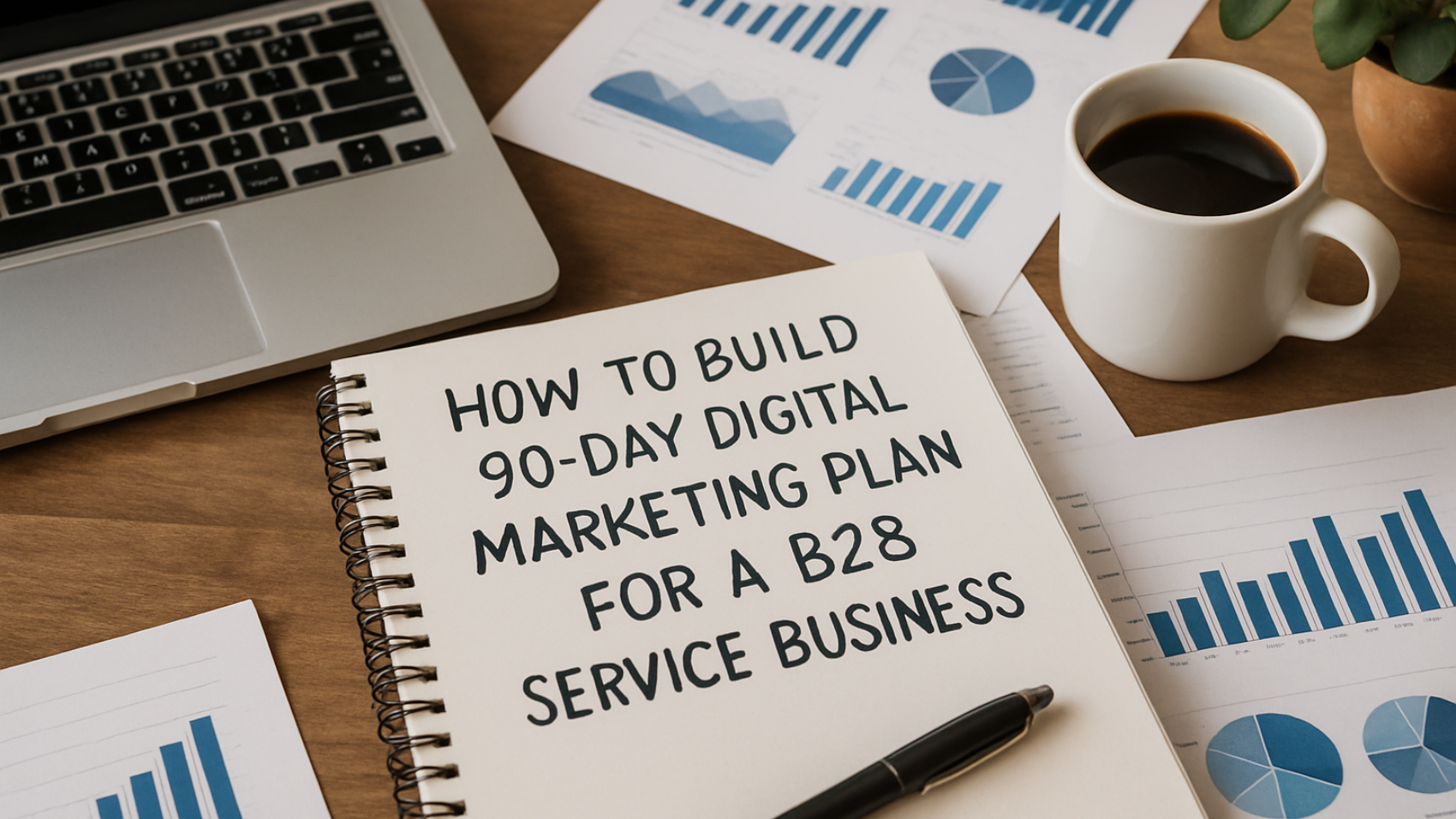
How to Build a 90-Day Digital Marketing Plan for a B2B Service Business

How to Build a 90-Day Digital Marketing Plan for a B2B Service Business

Most B2B service businesses don’t have a marketing problem. They have a planning problem. The website exists, a LinkedIn profile is active, maybe some blog posts have been published here and there, but none of it connects into something that actually moves the needle on pipeline.

A 90-day digital marketing plan solves that by forcing a short enough horizon to stay focused, but a long enough runway to see real results. If you’ve been stuck in reactive mode, this is the framework that changes that.

Why 90 Days Is the Right Unit of Planning

Quarterly planning sits at a genuinely useful intersection. A 30-day plan rarely gives you enough time to see whether a campaign or a content push is actually working.

A full-year plan almost always becomes theoretical by month three, when the market shifts or a key hire changes your service offering. Ninety days forces real prioritisation. You can’t do everything, so you have to choose what matters most right now.

For B2B service businesses specifically, the sales cycle adds another reason this window makes sense. A prospect who discovers you in week one of your plan may well convert into a conversation by week ten or eleven, which means the work you do in month one genuinely feeds the results you measure at the end of month three. That lag is worth building into your expectations from the start.

Dave Chaffey’s definition of 90-day marketing plans frames them as a way to create organisational alignment and reduce wasted effort, which is exactly right for service businesses where the founder or a small team is often wearing too many hats to sustain unfocused activity for long.

Before You Write a Single Goal: Do the Audit

The single most common mistake in building any marketing plan is skipping straight to tactics. Before you decide you need more LinkedIn content or a paid search campaign, you need an honest picture of what you’re starting with.

Run a proper website audit. Look at where your organic traffic is actually coming from, which pages have real engagement and which ones leak visitors immediately, and whether your calls to action are working. Our breakdown of what an SEO audit should include covers the technical and content layers worth reviewing here.

Beyond the website, audit your competitive position. Know who ranks for the terms your buyers actually search, and where you have a realistic shot at visibility versus where you’re fighting a losing battle.

A competitive SEO analysis should inform which content you prioritise in months one through three, not serve as an academic exercise. Then look at your existing content honestly: what’s earning attention, what’s been ignored, and what’s outdated enough to be doing more harm than good.

Setting Goals That Connect to Revenue

The goals in a B2B digital marketing plan need to trace back to real business outcomes, not vanity metrics. More website visitors is not a goal. More qualified discovery calls booked from inbound channels is a goal. More LinkedIn followers is not a goal. More responses to your outreach that convert to scheduled conversations is a goal.

For a 90-day plan, three to five concrete, measurable goals is the right number. Any fewer and the plan isn’t ambitious enough to change anything. Any more and you won’t resource them properly. A useful structure for each goal is: the metric, the current baseline, the 90-day target, and the channel or tactic responsible for moving it.

For example: a service business that currently books two inbound leads per month might set a 90-day goal of reaching five per month by combining an SEO-driven content push with a LinkedIn outreach sequence. That’s specific enough to plan against and honest enough to be achievable.

The Three-Phase Structure

Month One: Foundations and Signals

The first 30 days are not glamorous. This is where you fix what’s broken, establish the tracking you’ll need to make decisions in months two and three, and publish the first wave of content.

If your website has conversion issues, a slow load time, or a contact page that works poorly on mobile, fixing those things will quietly compound every other activity you do later. Our guide on optimising your website to increase conversions is a practical starting point for that work.

Set up your analytics properly if they aren’t already. That means goal tracking in Google Analytics, UTM parameters on any links you distribute, and a baseline snapshot of your current rankings for the keywords you care about. None of this is optional if you want to make evidence-based decisions at day 60 and day 90.

Content-wise, aim for two to three long-form pieces that target specific search terms your buyers use when they’re researching solutions, not just looking for your company name. These won’t rank immediately, but they’ll be earning authority by the time month three arrives.

Month Two: Activation and Outreach

Month two is where the plan starts to feel like real marketing. Your foundations are in place, your early content is indexed, and now you layer in active outreach and distribution.

For most B2B service businesses, this means a structured LinkedIn presence, direct outreach to a defined prospect list, and possibly a lead magnet or email nurture sequence for people who aren’t ready to buy yet.

LinkedIn deserves particular attention here. The platform has become genuinely important for B2B services, not as a place to broadcast, but as a place to build a visible point of view over time.

Consistent posting, direct engagement with the right people, and a clear service proposition on your profile all work together. The tactical depth of what that looks like is covered in this guide to using LinkedIn for business expansion.

Email is frequently underused by B2B service businesses. If you have any kind of list, even a small one built from past clients, referral contacts, and event connections, a simple monthly or fortnightly email that demonstrates your thinking is one of the highest-ROI activities available to you. It keeps you visible to warm audiences without the algorithm dependency that social channels carry.

Month Three: Optimise, Double Down, and Measure

By month three, you have actual data. Use it. Which content pieces are attracting the right visitors? Which outreach sequences are generating replies? Which channels are producing conversations that actually progress?

The temptation at this stage is to keep adding new activities, but the higher-leverage move is almost always to improve what’s already showing early signs of working rather than chasing something new.

Review your initial goals against real numbers. If you’re ahead of the target on organic traffic but behind on lead conversion, the problem is probably on the website or in how clearly you’re communicating your offer, not in the volume of traffic you’re generating.

If outreach is generating replies but they’re not converting to calls, the issue is likely in the pitch or the targeting, not the channel.

Month three is also when you plan the next quarter. The best 90-day plans end with a decision, not a summary: which two or three things performed well enough to expand, and which ones do you stop doing to free up resource for what’s working.

The Channels Worth Prioritising in B2B Services

Not every digital channel is equally valuable for a service business selling to other businesses. Here’s an honest ranking based on consistent patterns across B2B service contexts.

Organic search is slow but compounding. Content that ranks well brings qualified visitors for months or years without ongoing spend. The catch is that it takes time, which is exactly why it belongs in month one of a 90-day plan rather than month three.

LinkedIn is the most direct channel to decision-makers in most B2B categories. The combination of organic content and direct outreach gives you both inbound and outbound exposure in one place.

Email to existing and warm contacts remains one of the most underrated tools in the B2B kit. Most service businesses are sitting on relationship capital they’re not activating.

Referral and partnership activity doesn’t always feel like digital marketing, but in B2B services it’s often the highest-converting source of new business.

A deliberate effort to stay visible with past clients and complementary service providers belongs in any serious 90-day plan.

Paid channels, whether search ads or LinkedIn ads, can accelerate results but generally require a working funnel underneath them to convert well.

Turning on paid spend before your website converts and before you understand your messaging is usually a way to get fast feedback that something is broken, which is useful but expensive.

What Does a 90-Day Digital Marketing Plan Actually Look Like in Practice?

A real 90-day plan for a B2B service business is a working document, not a polished presentation. It contains: the audit findings, the three to five goals with baselines and targets, a month-by-month activity list with owners and deadlines, a content calendar for the quarter, and a simple dashboard of the metrics you’ll review weekly.

That’s it. Anything more elaborate tends to become something you present and then file rather than something you actually use.

The format matters less than the discipline of reviewing it regularly. Weekly check-ins against the key metrics, a mid-quarter review at the six-week mark, and a full retrospective at day 90 are the operating rhythm that makes the plan useful rather than decorative.

How Long Does It Take to See Results from a B2B Digital Marketing Plan?

This is one of the most common questions B2B service business owners ask before committing to a structured plan, and it deserves a direct answer.

Most businesses start seeing meaningful signals, increased website engagement, inbound enquiries, or positive responses to outreach, within the first 45 to 60 days of a well-executed plan.

Tangible pipeline impact, meaning actual sales conversations that trace back to the marketing activity, typically emerges between day 60 and the end of the quarter, though this varies based on your average sales cycle length.

Businesses with longer sales cycles may see the full commercial impact of their first 90-day plan reflected in the following quarter’s numbers rather than within the plan period itself.

Building the Plan You’ll Actually Execute

The single biggest predictor of whether a 90-day marketing plan produces results is not the sophistication of the strategy. It’s whether the plan gets executed consistently.

That sounds obvious, but most small and mid-sized B2B service businesses underestimate how much bandwidth real marketing activity requires, especially when it’s being managed alongside client delivery.

Build the plan around the time and resource you actually have, not the time you wish you had. A focused plan that executes three things well will outperform an ambitious plan that executes eight things poorly every time.

If internal capacity is the genuine constraint, that’s when bringing in an outside partner to handle the execution, whether for content, SEO, or LinkedIn management, makes the most direct commercial sense.

If you’re ready to start building a plan that’s grounded in how your specific business generates leads and closes clients, get in touch with the team at Arms Digital to talk through where to focus first.

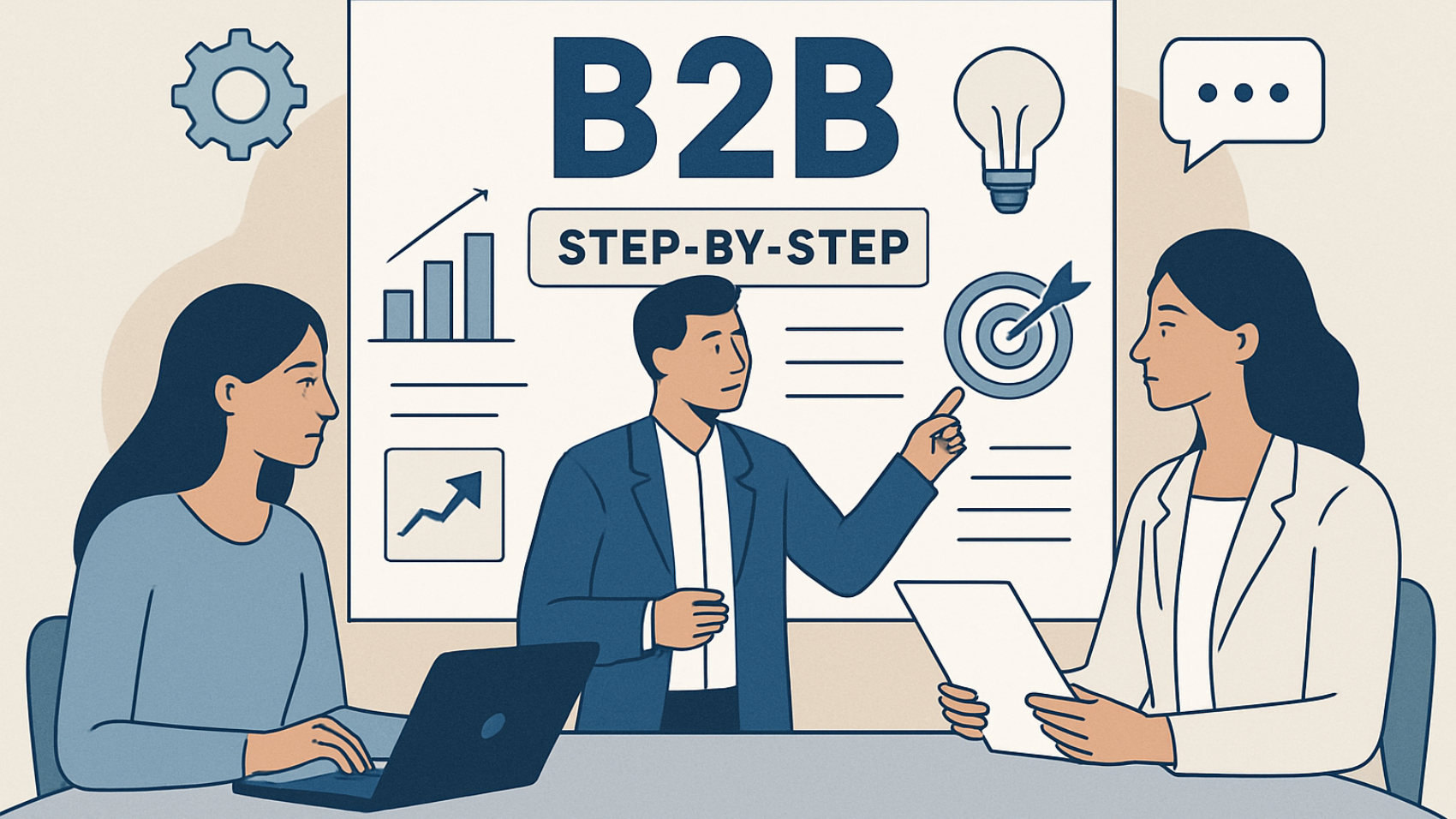
B2B Content Marketing Strategy: A Step-by-Step Guide for Service-Based Businesses

B2B Content Marketing Strategy: A Step-by-Step Guide for Service-Based Businesses

Why Most B2B Content Falls Flat — and What Actually Works

Most service-based businesses understand, at least in theory, that content marketing matters. They start a blog, post a few articles, maybe share them on LinkedIn once or twice, and then wait. When nothing comes of it, the conclusion is usually that content “doesn’t work for their industry.” The real problem is almost never the industry. It’s the absence of a coherent strategy behind the content.

B2B buyers — the decision-makers signing off on contracts for accounting firms, IT consultants, marketing agencies, legal practices, and every other professional service you can name — take longer to convert than retail consumers. They evaluate more. They read more. They talk to more people before committing. A B2B content marketing strategy isn’t about flooding the internet with blog posts. It’s about meeting those buyers at each stage of a careful, considered decision process and giving them something worth reading every time.

This guide walks through exactly how to build that strategy — from clarifying who you’re writing for, to choosing the right formats, to measuring whether any of it is actually working.

Step 1: Get Specific About Who You’re Trying to Reach

The single most common reason B2B content underperforms is that it was written for everyone, which means it resonates with no one. Before you write a word, you need a clear picture of the buyer you’re trying to influence — not a vague demographic sketch, but a real understanding of what keeps them up at night.

For a service business, that means asking questions like: What does this person’s working week actually look like? What decisions are they responsible for? What would make them look good in front of their own leadership team? What frustrations are they carrying around that a service like yours could quietly dissolve? The answers to those questions are not found in a spreadsheet. They come from sales call notes, from client conversations, from the questions people ask in discovery meetings, and from comments in the LinkedIn posts your prospects actually engage with.

Once you have that picture, you can build what’s often called an ideal client profile or buyer persona — but resist the urge to make it a generic template exercise. A useful persona is specific enough that you could read a piece of draft content against it and know immediately whether the tone, vocabulary, and concerns match. If your persona is “marketing manager, aged 30–45,” it won’t do that job. If your persona is “a head of marketing at a mid-size professional services firm who is under pressure to demonstrate revenue impact from their team’s activities and is sceptical of agencies that lead with creative over commercial outcomes,” it will.

Step 2: Map Content to the Buyer Journey

B2B buyers don’t move in a straight line, but they do move through recognisable phases. At the broadest level, there’s a phase where they become aware a problem exists, a phase where they actively research solutions, and a phase where they evaluate specific providers and make a decision. Your content needs to do different things at each stage.

Awareness-Stage Content

At this stage, your buyer knows something isn’t working, but they may not yet have the vocabulary to describe it precisely. Awareness-stage content earns attention by naming the problem clearly and framing it in a way that makes the reader feel understood. Think: explainer articles, thought leadership pieces that challenge a common assumption in the industry, or data-led posts that surface a trend your audience hasn’t fully processed yet. This content isn’t selling anything. It’s demonstrating that you understand the territory.

Consideration-Stage Content

Once a buyer is actively researching, they want depth. They’re comparing approaches, understanding trade-offs, and building an internal case for a particular direction. This is where detailed guides, comparison pieces, and process-oriented content shine. A professional services firm might publish a detailed breakdown of how to evaluate different approaches to a specific challenge their clients face — not to sell their own service directly, but to position themselves as the most knowledgeable voice in the conversation.

Decision-Stage Content

By the time someone is close to choosing a provider, they want proof. Case studies, portfolio examples, testimonials, and process walkthroughs all serve this stage. They answer the question: “Can this team actually deliver what they’re promising?” If you’re a service business without a strong body of social proof and real-world examples, building this content layer should be a priority before almost anything else.

Step 3: Choose Content Formats That Match Your Audience’s Habits

There’s no universally correct format for B2B content. The right choice depends on where your buyers spend their time, how they prefer to consume information, and what you can actually produce consistently at a high standard.

Long-form written content — detailed articles, guides, and opinion pieces — remains one of the most durable formats in B2B. It compounds over time through organic search, it can be repurposed into shorter social content, and it signals the kind of depth that builds genuine authority. That said, written content only works if it’s genuinely well-written. A 2,000-word post that meanders, repeats itself, and fails to reach a useful conclusion does more damage than no post at all.

LinkedIn has become the dominant organic channel for many B2B service businesses, particularly for solo consultants and boutique agencies where the founder’s personal voice carries real weight. A thought-provoking post from a credible individual often outperforms the same content published anonymously on a company page. If your buyers are active on LinkedIn — and in most B2B categories, they are — it deserves a dedicated content approach, not just a feed of recycled blog links. The ultimate guide to using LinkedIn for business expansion on this site goes into that in considerably more depth.

Video, webinars, and podcasts are worth considering if you have the production capacity to do them well. The bar for “well enough” is lower than most people assume — a clear, well-lit, well-edited talking-head video on a substantive topic will outperform a polished but empty one — but production quality still needs to meet a minimum threshold to avoid undermining your credibility.

Step 4: Build a Keyword and Topic Strategy Around Real Search Intent

Even the best-written content needs to be discoverable. For most service businesses, organic search is one of the highest-value acquisition channels available — it generates inbound interest from buyers who are already looking for a solution. Getting found requires understanding what your buyers are actually searching for, and writing content that genuinely answers those queries.

Keyword research for B2B service businesses tends to surface lower search volumes than consumer categories, but that’s not a reason to deprioritise it. A keyword attracting 200 searches per month in a high-value B2B niche can generate far more revenue per conversion than a consumer keyword with 50,000 monthly searches. The economics are completely different.

Focus first on high-intent, problem-aware queries — the kind of searches someone makes when they’re actively trying to solve something, not just browse. Layer in broader educational topics at the awareness stage, but make sure your core commercial pages are optimised first. It’s worth understanding what a proper technical and content audit looks like before you invest heavily in new content production — this breakdown of what an SEO audit should include covers the essentials clearly.

Beyond keywords, think in terms of topic clusters. Rather than publishing isolated articles on unrelated subjects, build a network of content around your core service areas. A central, comprehensive piece on a broad topic links to several more specific pieces that explore individual subtopics in detail. This structure is good for search engines and — more importantly — it’s good for readers who want to go deeper on something that caught their attention.

Step 5: Establish a Publishing Cadence You Can Actually Sustain

Consistency is one of the most underrated factors in content marketing success. The businesses that win through content are rarely those that publish the most — they’re the ones that publish reliably, at a quality level they can maintain over months and years.

The right cadence for your business depends on your resources, your team’s capacity, and the competitive density of your category. A solo consultant who publishes one deeply-researched article per month, every month, for two years, will almost certainly outperform a larger team that publishes three posts a week for three months and then burns out and goes quiet. Sporadic bursts of activity followed by long silences are worse than a modest but unbroken rhythm.

Build a content calendar that accounts for the full production process — ideation, research, drafting, editing, design if needed, publishing, and distribution. If you’re managing content alongside everything else a service business demands, that calendar needs to be realistic about capacity. It’s better to plan for one piece of content per month and deliver it than to plan for four and consistently fall short.

Step 6: Distribute Content Actively, Not Passively

Publishing content and distributing content are two entirely different activities. Most businesses treat them as the same thing: they hit publish, share the link once on social media, and call it done. That approach leaves most of the value on the table.

Active distribution means taking each piece of content and thinking deliberately about every channel, format, and audience where it might create value. A detailed article can become a LinkedIn carousel, a short-form video script, a thread of observations on social media, a section of a client newsletter, or a talking point in a sales conversation. The content doesn’t have to be created from scratch each time — it has to be adapted intelligently for each context.

Email newsletters deserve particular mention here. In B2B, a well-maintained email list of prospects, past clients, and referral partners is one of the most direct and reliable distribution channels available. People who have opted in to receive content from you have already signalled interest. Delivering genuinely useful content to that list regularly keeps you present in their consideration set without requiring them to seek you out.

Step 7: Measure the Right Things

Content marketing generates a wide range of metrics, most of which are noise. Page views, social impressions, and follower counts are vanity metrics unless they connect clearly to business outcomes. The metrics that matter for a service business are the ones that track progress toward real commercial results: qualified leads, sales conversations, proposal requests, and — ultimately — signed clients.

That said, it’s worth tracking a small number of leading indicators that predict downstream commercial impact. Organic search rankings on target keywords, email list growth rate, time spent on page for key content pieces, and repeat visit rates are all reasonable signals that content is doing useful work before it’s visible in the revenue line. The key is to choose a small set of metrics that you’ll actually review and act on, rather than building a sprawling dashboard that no one opens.

According to Salesforce’s B2B content marketing research, one of the most persistent gaps in B2B content programmes is the absence of a defined measurement framework before content is published. Most businesses don’t know what success looks like going in, which makes it impossible to evaluate whether it’s been achieved coming out.

A Question B2B Service Businesses Ask Constantly

How long does it take for B2B content marketing to generate leads?

The honest answer is six to twelve months before organic content typically begins to generate consistent inbound enquiries — and that timeline assumes content is published regularly, is genuinely well-optimised for search, and targets the right audience from the start. Paid amplification can accelerate early results, but organic content compounds over time in a way paid traffic does not: an article that ranks well continues to generate leads for years with no additional spend. Service businesses that treat content as a long-term asset rather than a short-term lead-generation tactic are the ones that see the most durable returns.

Putting the Strategy Into Practice

The gap between understanding content strategy and actually executing it consistently is where most service businesses stall. The concepts aren’t complicated. The discipline required to research properly, write clearly, publish consistently, distribute actively, and measure honestly — while also running a service business — is genuinely demanding.

One thing that helps is starting narrower than feels comfortable. Rather than trying to build a comprehensive content programme across every topic relevant to your business simultaneously, pick one or two core themes that map directly to your highest-value service areas and go deep on those first. Build authority in a tight area before expanding. The temptation to cover everything immediately is understandable, but it almost always produces thin content that ranks for nothing and persuades no one.

If you’re working through how to align your content with a broader digital presence — including how your website is actually performing for the visitors your content attracts — there are practical, no-cost improvements that make a measurable difference to conversion rates once you’re generating traffic worth converting.

The businesses that build lasting authority through content are rarely those with the largest budgets or the biggest teams. They’re the ones that commit to the process, stay consistent when results are slow to appear, and hold themselves to a standard of genuine usefulness rather than volume. That’s a higher bar than most competitors will clear — which is precisely why it’s worth clearing.