
What Is a Digital Marketing Audit and How Often Should B2B Companies Run One

What Is a Digital Marketing Audit and How Often Should B2B Companies Run One

When Was the Last Time You Actually Looked Under the Hood?

Most B2B marketing teams are busy executing: writing content, running campaigns, chasing leads. What rarely happens is stepping back to ask whether any of it is actually working as well as it should. That is exactly the problem a digital marketing audit is designed to solve.

A digital marketing audit is a structured review of every active marketing channel your business uses. It tells you where your budget is performing, where it is leaking, and what gaps are quietly costing you pipeline. For B2B companies in particular, where sales cycles are long and buyer journeys are complex, running one regularly is not optional. It is foundational.

What Does a Digital Marketing Audit Actually Cover?

The short answer: everything that touches how buyers find you, evaluate you, and decide to engage with you.

In practice, a thorough audit breaks down into several distinct areas. Each one is worth examining on its own terms, but the real value comes from seeing how they connect.

Website and Technical SEO

This is usually where audits surface the most urgent problems. Broken links, slow page speeds, crawl errors, thin pages, and poor internal linking all suppress rankings without anyone noticing until traffic drops. A technical SEO review catches these issues early. If you want a deeper look at what that involves, the Arms Digital guide on identifying and fixing technical SEO issues walks through the most common culprits and how to address them.

Organic Search Performance

Your keyword rankings, organic traffic trends, click-through rates, and search impressions all tell a story. Are you visible for the terms your ideal buyers actually search? Are high-ranking pages converting, or just attracting irrelevant traffic? This layer of the audit connects search data directly to pipeline value.

Content Quality and Coverage

B2B buyers research extensively before they ever speak to a salesperson. Your content audit maps what you have against what your buyers need at each stage of the decision process. Gaps here often explain why companies generate awareness but struggle to move prospects toward a conversation.

Paid Advertising Efficiency

Paid channels burn budget fast when left unreviewed. An audit checks whether your targeting is aligned with your actual buyer profile, whether your landing pages are converting at a reasonable rate, and whether your cost per lead makes sense relative to deal value. According to research from Chatterbuzz Media, companies that conduct regular marketing audits consistently identify ad spend waste that would otherwise go unnoticed for months.

Social Media and Email

For most B2B companies, LinkedIn activity and email nurture sequences deserve specific attention. The audit looks at engagement rates, list health, and whether these channels are actually accelerating the buyer journey or just generating vanity metrics.

Conversion and Analytics Infrastructure

None of the above matters if your tracking is broken. The audit checks that your analytics setup accurately captures leads, form submissions, and funnel movement. If your data cannot be trusted, every decision built on top of it is suspect.

Why B2B Companies Specifically Need This

B2B marketing operates under constraints that consumer marketing does not. Longer sales cycles mean that problems compound quietly for months before they show up in revenue. A campaign that generates low-quality leads in January might not reveal itself as a failure until Q3, when those leads have all stalled in the pipeline.

The multi-stakeholder buying process adds another layer. Your marketing needs to speak to different roles: the technical evaluator, the economic buyer, the end user. An audit checks whether your messaging and channel mix actually reflects that reality, or whether you are inadvertently targeting only one type of decision-maker.

There is also the competitive dimension. B2B markets tend to be narrower, which means your competitors are watching the same keywords, bidding on the same terms, and targeting the same accounts. A competitive SEO analysis built into your audit cycle shows you where rivals are gaining ground before you feel it in your own numbers.

How Often Should a B2B Company Run a Digital Marketing Audit?

This is one of the most common questions B2B marketing leaders ask, and the answer depends on the size and pace of the business. But there is a practical framework most companies can follow.

The Full Audit: Once or Twice a Year

A comprehensive digital marketing audit, covering all channels, content, technical SEO, analytics, and competitive positioning, typically makes sense every six to twelve months. This gives you enough time between audits for changes to take effect, while catching drift before it becomes a significant problem.

Companies launching new service lines, entering new markets, or recovering from a traffic drop should run a full audit outside this cycle rather than waiting for the scheduled one.

Quarterly Pulse Reviews

Between full audits, quarterly reviews keep performance on track. These are lighter: checking whether key metrics are moving in the right direction, reviewing any algorithm or platform changes that might affect performance, and flagging anything that needs deeper investigation at the next full audit.

Think of the quarterly review as maintenance. The annual audit is the full diagnostic.

Trigger-Based Audits

Certain events should prompt an immediate review regardless of the calendar. A sudden drop in organic traffic, a sharp rise in cost per lead, a rebrand, a website migration, or a major product change all warrant an unscheduled audit. Waiting six months after a site migration to discover tracking broke during the transition is an expensive mistake.

What an Audit Should Produce

A digital marketing audit is only useful if it ends with clear, prioritised actions. Not a list of observations. Not a slide deck full of screenshots. Actionable recommendations, ranked by impact and effort, with ownership assigned.

The output should answer three questions directly. Where is budget being wasted right now? Where are the highest-leverage opportunities to improve performance? What technical or structural issues need fixing before other improvements will take hold?

If an audit does not answer those three questions, it has not gone deep enough.

Common Mistakes B2B Teams Make With Audits

Running an audit that covers only the channels you are most comfortable with is one of the most common errors. A company confident in its content marketing will audit its blog thoroughly but barely glance at its paid campaigns. The channels you feel least sure about are often the ones with the biggest problems.

Another mistake is treating the audit as a one-time exercise. Markets shift. Algorithms change. Competitors adjust. A single audit from two years ago is essentially useless for informing decisions today. The value comes from making it a recurring practice, not a crisis response.

Finally, teams often underestimate how much of their audit should focus on data quality. If you cannot trust your analytics, you cannot trust your conclusions. Before drawing any insight from your audit, verify that your measurement infrastructure is accurate. The Arms Digital post on using Google Analytics 4 to track B2B lead quality is a practical starting point for anyone who wants to strengthen this layer.

Frequently Asked Questions

What does a digital marketing audit actually cover?

A digital marketing audit covers your SEO performance, website technical health, content quality, paid advertising efficiency, social media presence, email marketing, and conversion rate. The goal is to find what is working, what is wasting budget, and what gaps are holding your pipeline back.

How often should a B2B company run a digital marketing audit?

Most B2B companies benefit from a full digital marketing audit once or twice a year, with lighter quarterly reviews in between. Companies in fast-moving markets or undergoing major strategy changes may need to audit more frequently.

What is the difference between an SEO audit and a digital marketing audit?

An SEO audit focuses specifically on your website’s search visibility, technical health, and keyword performance. A digital marketing audit is broader: it includes SEO but also reviews your paid channels, content strategy, social media, email, and how all of these work together toward your business goals. For a detailed breakdown of what an SEO audit specifically includes, the Arms Digital guide on what an SEO audit should include covers the full scope.

Making the Audit a Habit, Not a Fire Drill

The businesses that get the most from digital marketing audits treat them as a scheduled, strategic discipline. Not a reaction to declining results. Not something that happens when a new agency takes over. A regular, structured review baked into how the marketing team operates.

For B2B companies with complex buying cycles and limited room for wasted spend, that discipline is one of the highest-leverage things a marketing leader can build. The audit does not just find problems. It keeps the entire marketing engine calibrated to the goals that actually matter.

If you are ready to put that process in place, the Arms Digital team works with B2B companies to run audits that produce real, prioritised action plans rather than reports that gather dust.
How to Build a 90-Day Digital Marketing Plan for a B2B Service Business

How to Build a 90-Day Digital Marketing Plan for a B2B Service Business

Most B2B service businesses don’t have a marketing problem. They have a planning problem. The website exists, a LinkedIn profile is active, maybe some blog posts have been published here and there, but none of it connects into something that actually moves the needle on pipeline.

A 90-day digital marketing plan solves that by forcing a short enough horizon to stay focused, but a long enough runway to see real results. If you’ve been stuck in reactive mode, this is the framework that changes that.

Why 90 Days Is the Right Unit of Planning

Quarterly planning sits at a genuinely useful intersection. A 30-day plan rarely gives you enough time to see whether a campaign or a content push is actually working.

A full-year plan almost always becomes theoretical by month three, when the market shifts or a key hire changes your service offering. Ninety days forces real prioritisation. You can’t do everything, so you have to choose what matters most right now.

For B2B service businesses specifically, the sales cycle adds another reason this window makes sense. A prospect who discovers you in week one of your plan may well convert into a conversation by week ten or eleven, which means the work you do in month one genuinely feeds the results you measure at the end of month three. That lag is worth building into your expectations from the start.

Dave Chaffey’s definition of 90-day marketing plans frames them as a way to create organisational alignment and reduce wasted effort, which is exactly right for service businesses where the founder or a small team is often wearing too many hats to sustain unfocused activity for long.

Before You Write a Single Goal: Do the Audit

The single most common mistake in building any marketing plan is skipping straight to tactics. Before you decide you need more LinkedIn content or a paid search campaign, you need an honest picture of what you’re starting with.

Run a proper website audit. Look at where your organic traffic is actually coming from, which pages have real engagement and which ones leak visitors immediately, and whether your calls to action are working. Our breakdown of what an SEO audit should include covers the technical and content layers worth reviewing here.

Beyond the website, audit your competitive position. Know who ranks for the terms your buyers actually search, and where you have a realistic shot at visibility versus where you’re fighting a losing battle.

A competitive SEO analysis should inform which content you prioritise in months one through three, not serve as an academic exercise. Then look at your existing content honestly: what’s earning attention, what’s been ignored, and what’s outdated enough to be doing more harm than good.

Setting Goals That Connect to Revenue

The goals in a B2B digital marketing plan need to trace back to real business outcomes, not vanity metrics. More website visitors is not a goal. More qualified discovery calls booked from inbound channels is a goal. More LinkedIn followers is not a goal. More responses to your outreach that convert to scheduled conversations is a goal.

For a 90-day plan, three to five concrete, measurable goals is the right number. Any fewer and the plan isn’t ambitious enough to change anything. Any more and you won’t resource them properly. A useful structure for each goal is: the metric, the current baseline, the 90-day target, and the channel or tactic responsible for moving it.

For example: a service business that currently books two inbound leads per month might set a 90-day goal of reaching five per month by combining an SEO-driven content push with a LinkedIn outreach sequence. That’s specific enough to plan against and honest enough to be achievable.

The Three-Phase Structure

Month One: Foundations and Signals

The first 30 days are not glamorous. This is where you fix what’s broken, establish the tracking you’ll need to make decisions in months two and three, and publish the first wave of content.

If your website has conversion issues, a slow load time, or a contact page that works poorly on mobile, fixing those things will quietly compound every other activity you do later. Our guide on optimising your website to increase conversions is a practical starting point for that work.

Set up your analytics properly if they aren’t already. That means goal tracking in Google Analytics, UTM parameters on any links you distribute, and a baseline snapshot of your current rankings for the keywords you care about. None of this is optional if you want to make evidence-based decisions at day 60 and day 90.

Content-wise, aim for two to three long-form pieces that target specific search terms your buyers use when they’re researching solutions, not just looking for your company name. These won’t rank immediately, but they’ll be earning authority by the time month three arrives.

Month Two: Activation and Outreach

Month two is where the plan starts to feel like real marketing. Your foundations are in place, your early content is indexed, and now you layer in active outreach and distribution.

For most B2B service businesses, this means a structured LinkedIn presence, direct outreach to a defined prospect list, and possibly a lead magnet or email nurture sequence for people who aren’t ready to buy yet.

LinkedIn deserves particular attention here. The platform has become genuinely important for B2B services, not as a place to broadcast, but as a place to build a visible point of view over time.

Consistent posting, direct engagement with the right people, and a clear service proposition on your profile all work together. The tactical depth of what that looks like is covered in this guide to using LinkedIn for business expansion.

Email is frequently underused by B2B service businesses. If you have any kind of list, even a small one built from past clients, referral contacts, and event connections, a simple monthly or fortnightly email that demonstrates your thinking is one of the highest-ROI activities available to you. It keeps you visible to warm audiences without the algorithm dependency that social channels carry.

Month Three: Optimise, Double Down, and Measure

By month three, you have actual data. Use it. Which content pieces are attracting the right visitors? Which outreach sequences are generating replies? Which channels are producing conversations that actually progress?

The temptation at this stage is to keep adding new activities, but the higher-leverage move is almost always to improve what’s already showing early signs of working rather than chasing something new.

Review your initial goals against real numbers. If you’re ahead of the target on organic traffic but behind on lead conversion, the problem is probably on the website or in how clearly you’re communicating your offer, not in the volume of traffic you’re generating.

If outreach is generating replies but they’re not converting to calls, the issue is likely in the pitch or the targeting, not the channel.

Month three is also when you plan the next quarter. The best 90-day plans end with a decision, not a summary: which two or three things performed well enough to expand, and which ones do you stop doing to free up resource for what’s working.

The Channels Worth Prioritising in B2B Services

Not every digital channel is equally valuable for a service business selling to other businesses. Here’s an honest ranking based on consistent patterns across B2B service contexts.

Organic search is slow but compounding. Content that ranks well brings qualified visitors for months or years without ongoing spend. The catch is that it takes time, which is exactly why it belongs in month one of a 90-day plan rather than month three.

LinkedIn is the most direct channel to decision-makers in most B2B categories. The combination of organic content and direct outreach gives you both inbound and outbound exposure in one place.

Email to existing and warm contacts remains one of the most underrated tools in the B2B kit. Most service businesses are sitting on relationship capital they’re not activating.

Referral and partnership activity doesn’t always feel like digital marketing, but in B2B services it’s often the highest-converting source of new business.

A deliberate effort to stay visible with past clients and complementary service providers belongs in any serious 90-day plan.

Paid channels, whether search ads or LinkedIn ads, can accelerate results but generally require a working funnel underneath them to convert well.

Turning on paid spend before your website converts and before you understand your messaging is usually a way to get fast feedback that something is broken, which is useful but expensive.

What Does a 90-Day Digital Marketing Plan Actually Look Like in Practice?

A real 90-day plan for a B2B service business is a working document, not a polished presentation. It contains: the audit findings, the three to five goals with baselines and targets, a month-by-month activity list with owners and deadlines, a content calendar for the quarter, and a simple dashboard of the metrics you’ll review weekly.

That’s it. Anything more elaborate tends to become something you present and then file rather than something you actually use.

The format matters less than the discipline of reviewing it regularly. Weekly check-ins against the key metrics, a mid-quarter review at the six-week mark, and a full retrospective at day 90 are the operating rhythm that makes the plan useful rather than decorative.

How Long Does It Take to See Results from a B2B Digital Marketing Plan?

This is one of the most common questions B2B service business owners ask before committing to a structured plan, and it deserves a direct answer.

Most businesses start seeing meaningful signals, increased website engagement, inbound enquiries, or positive responses to outreach, within the first 45 to 60 days of a well-executed plan.

Tangible pipeline impact, meaning actual sales conversations that trace back to the marketing activity, typically emerges between day 60 and the end of the quarter, though this varies based on your average sales cycle length.

Businesses with longer sales cycles may see the full commercial impact of their first 90-day plan reflected in the following quarter’s numbers rather than within the plan period itself.

Building the Plan You’ll Actually Execute

The single biggest predictor of whether a 90-day marketing plan produces results is not the sophistication of the strategy. It’s whether the plan gets executed consistently.

That sounds obvious, but most small and mid-sized B2B service businesses underestimate how much bandwidth real marketing activity requires, especially when it’s being managed alongside client delivery.

Build the plan around the time and resource you actually have, not the time you wish you had. A focused plan that executes three things well will outperform an ambitious plan that executes eight things poorly every time.

If internal capacity is the genuine constraint, that’s when bringing in an outside partner to handle the execution, whether for content, SEO, or LinkedIn management, makes the most direct commercial sense.

If you’re ready to start building a plan that’s grounded in how your specific business generates leads and closes clients, get in touch with the team at Arms Digital to talk through where to focus first.

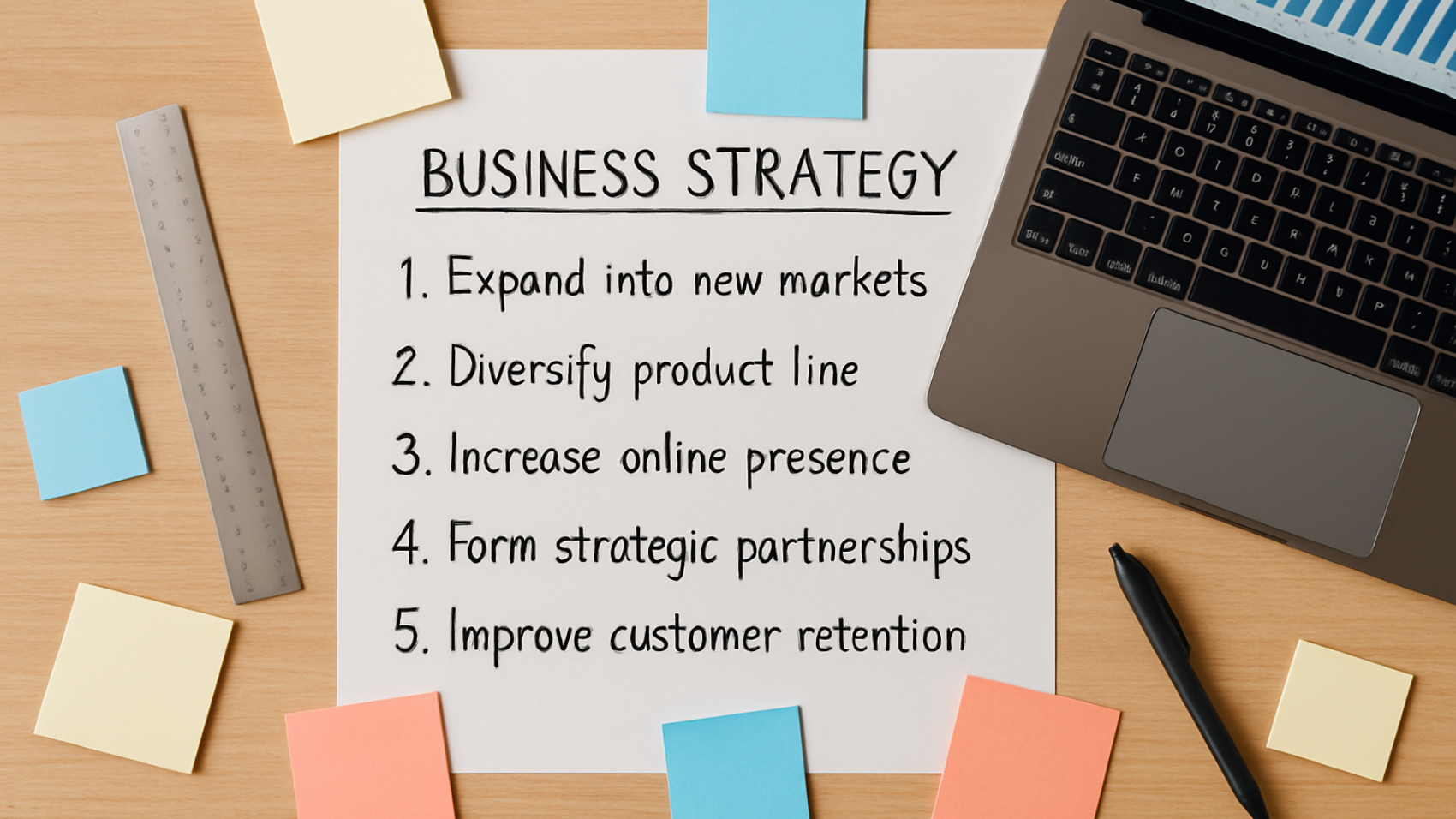
Top-down view of a numbered business growth strategy list on paper surrounded by colourful sticky notes and a partially visible laptop with a bar chart on a wooden desk.

10 Proven Strategies to Grow Your Business

10 Proven Strategies to Grow Your Business

Growing a business requires a multifaceted approach. Here are ten proven strategies that can facilitate growth:

1. Develop a clear business plan that outlines your goals, target market, and strategies.
2. Invest in marketing by diversifying channels to reach a wider audience.
3. Enhance your product or service offerings based on market trends and consumer feedback.
4. Implement a customer loyalty program to retain existing clients.
5. Utilize technology to automate processes and increase efficiency.
6. Expand your sales team and invest in training for better performance.
7. Explore new markets by identifying untapped demographics or geographic regions.
8. Leverage social media to engage with customers and promote your brand.
9. Network and build relationships with other businesses for collaboration opportunities.
10. Continuously assess and adapt your strategies based on performance metrics and market changes.

5 Essential Tips for Small Business Growth

Small businesses often face unique challenges, but growth is achievable with the right strategies. Here are five essential tips:

1. Focus on your niche market to establish a strong brand presence.
2. Prioritize customer service to enhance satisfaction and encourage referrals.
3. Keep a close eye on your financials to ensure sustainable growth.
4. Utilize local SEO to improve online visibility and attract nearby customers.
5. Seek mentorship or join local business groups for support and advice.

How to Leverage Social Media for Business Expansion

Social media serves as a powerful tool for business expansion. To leverage it effectively:

1. Create engaging content that resonates with your target audience.
2. Use paid advertising on platforms like Facebook and Instagram to reach a broader audience.
3. Engage with followers by responding to comments and messages promptly.
4. Collaborate with influencers to tap into their follower base.
5. Analyze social media metrics to refine your strategy and improve engagement.

The Power of Networking: Growing Your Business Through Connections

Networking is essential for business growth. Building connections can lead to new opportunities, partnerships, and insights. Attend industry events, join professional organizations, and engage with peers online. Remember, relationships built on trust and mutual benefit can significantly impact your business trajectory.

7 Innovative Marketing Tactics to Boost Your Business

Staying ahead in the competitive market requires innovative marketing tactics. Consider these seven strategies:

1. Create interactive content such as quizzes or polls to engage your audience.
2. Host webinars or workshops to showcase your expertise and attract leads.
3. Develop referral programs to incentivize existing customers to bring in new clients.
4. Utilize video marketing to tell your brand story effectively.
5. Implement guerilla marketing tactics for a bold and memorable impact.
6. Use personalized email campaigns to nurture leads and retain customers.
7. Collaborate with other brands for co-marketing opportunities.

How to Create a Scalable Business Model

A scalable business model allows for growth without a corresponding increase in costs. To create one:

1. Automate processes where possible to reduce manual workload.
2. Standardize operations to maintain quality as you grow.
3. Invest in technology that supports scalability, such as cloud solutions.
4. Build a strong supply chain that can adapt to increased demand.
5. Focus on customer acquisition strategies that can be replicated easily.

Understanding Customer Needs: The Key to Business Growth

Customer needs are the foundation of business growth. Conduct regular market research to identify evolving preferences. Engage with customers through surveys and feedback forms to gain insights. Tailoring your offerings to meet these needs can enhance customer satisfaction and drive loyalty.

The Role of Customer Feedback in Business Development

Customer feedback is invaluable for refining products and services. Establish multiple channels for customers to share their opinions, such as online reviews and social media. Regularly analyze this feedback to identify areas for improvement and implement changes that resonate with your audience.

Maximizing Your Online Presence for Business Growth

A strong online presence is crucial for growth in today’s digital landscape. Optimize your website for search engines and ensure it is mobile-friendly. Utilize social media platforms to engage with your audience and share valuable content. Consider investing in digital marketing strategies such as PPC advertising to drive traffic to your site.

How to Use Data Analytics to Drive Business Success

Data analytics can provide valuable insights into your business operations. By tracking key performance indicators (KPIs), you can identify trends and make informed decisions. Use analytics tools to monitor customer behavior, sales patterns, and marketing effectiveness, allowing you to adjust strategies for better results.

5 Ways to Improve Your Sales Funnel

Optimizing your sales funnel is essential for converting leads into customers. Here are five ways to improve it:

1. Clearly define your target audience to tailor messaging effectively.
2. Create compelling content that addresses potential customer pain points.
3. Utilize lead magnets, such as free trials or e-books, to capture leads.
4. Nurture leads through personalized follow-ups and targeted email campaigns.
5. Analyze funnel metrics to identify drop-off points and refine your approach.

Building a Strong Brand Identity for Sustainable Growth

A strong brand identity helps differentiate your business in a crowded market. Start by defining your brand values and mission. Create a consistent visual identity and messaging across all platforms. Engage with your audience authentically to foster loyalty and trust.

The Importance of Financial Management in Business Expansion

Effective financial management is critical for expansion. Keep detailed records of income and expenses to maintain cash flow. Create budgets and forecasts to plan for future growth. Regularly review your financial health to make informed decisions about investments and scaling operations.

How to Foster a Growth Mindset in Your Team

A growth mindset encourages employees to embrace challenges and learn from failures. Promote a culture of continuous learning by providing training and development opportunities. Encourage open communication and collaboration to inspire innovation and creativity within your team.

Exploring New Markets: Strategies for Business Expansion

When considering expansion into new markets, conduct thorough research to understand local demand and competition. Tailor your offerings to meet the specific needs of the new audience. Develop a strategic marketing plan that resonates with local consumers and consider partnerships with local businesses.

Creating Strategic Partnerships for Business Growth

Strategic partnerships can enhance your business’s reach and resources. Identify potential partners whose strengths complement your own. Establish clear objectives and mutual benefits to ensure a successful collaboration. Regularly evaluate the partnership to maximize its effectiveness.

6 Steps to Effective Business Planning

An effective business plan serves as a roadmap for growth. Follow these six steps:

1. Define your vision and mission statements.
2. Conduct a SWOT analysis to identify strengths, weaknesses, opportunities, and threats.
3. Set specific, measurable goals for your business.
4. Outline strategies to achieve your goals, including marketing and operations.
5. Create a financial plan that includes budgets and forecasts.
6. Regularly review and adjust your business plan based on performance and market changes.

The Impact of Technology on Business Growth

Technology continues to transform how businesses operate. Embrace digital tools to streamline processes, improve communication, and enhance customer engagement. Consider adopting e-commerce platforms to expand your sales channels and explore automation solutions to increase efficiency.

How to Enhance Customer Experience to Drive Sales

Enhancing the customer experience is crucial for driving sales. Focus on providing personalized interactions, quality service, and seamless transactions. Gather customer feedback to identify pain points and implement changes that improve satisfaction. A positive experience encourages repeat business and referrals.

4 Key Metrics to Measure Your Business Growth

To effectively measure business growth, track these four key metrics:

1. Revenue Growth: Analyze year-over-year revenue increases to assess financial health.
2. Customer Acquisition Cost: Calculate the cost of acquiring new customers to evaluate marketing effectiveness.
3. Customer Lifetime Value: Understand the long-term value of a customer to inform retention strategies.
4. Profit Margin: Monitor profit margins to ensure your business remains sustainable and profitable.

By implementing these strategies and focusing on continuous improvement, businesses can achieve sustainable growth and success in an ever-evolving market.

Creating a Social Media Marketing Plan: Step-by-Step Guide

Creating a Social Media Marketing Plan: Step-by-Step Guide

Creating a Social Media Marketing Plan: Step-by-Step Guide

Understanding Your Audience

Before diving into the creation of a social media marketing plan, it is crucial to understand your target audience. Who are they? What are their interests, behaviors, and demographics? Conducting thorough market research is essential to identify the characteristics of your ideal customer. Utilize surveys, social listening tools, and analytics from existing social media platforms to gather data. The more you know about your audience, the better you can tailor your content and messaging to meet their needs and preferences.

Setting Clear Goals

Once you have a solid understanding of your audience, the next step is to set clear, measurable goals for your social media marketing efforts. These goals should align with your overall business objectives and can include increasing brand awareness, generating leads, driving website traffic, or boosting engagement. Use the SMART criteria—Specific, Measurable, Achievable, Relevant, and Time-bound—to guide your goal-setting process. Having defined goals will help you stay focused and assess the effectiveness of your strategies over time.

Choosing the Right Platforms

Not all social media platforms are created equal, and each has its own unique user base and features. Depending on your target audience and marketing goals, you should choose the platforms that will be most effective for your brand. For instance, if you are a B2B company, LinkedIn might be ideal, while a visually-driven business may find success on Instagram or Pinterest. Research the demographics and engagement levels of various platforms to ensure you invest your time and resources wisely.

Developing a Content Strategy

A successful social media marketing plan relies heavily on a well-thought-out content strategy. Determine the types of content you will produce—such as blog posts, videos, infographics, or user-generated content—and how often you will post. Consider creating a content calendar to plan and organize your posts in advance. This will help maintain consistency and allow for strategic timing around promotions, holidays, and events. Remember to focus on creating high-quality, valuable content that resonates with your audience and encourages engagement.

Engagement and Community Building

Social media is not just about broadcasting messages; it’s also about building relationships. Engage with your audience by responding to comments, messages, and mentions promptly. Encourage user interaction through polls, questions, and contests. Building a community around your brand fosters loyalty and can significantly enhance customer retention. Recognize and celebrate your loyal followers and consider featuring user-generated content to create a sense of belonging and appreciation.

Analyzing Performance

To ensure your social media marketing plan is effective, regularly analyze your performance against the goals you set. Use built-in analytics tools on social media platforms to track metrics such as engagement rates, reach, impressions, and conversion rates. Evaluate which types of content are performing best and adjust your strategy accordingly. Conducting monthly or quarterly reviews will help you identify trends and make data-driven decisions to optimize your efforts.

Adjusting Your Strategy

The digital landscape is constantly changing, and so are the preferences of your audience. Be prepared to adjust your social media marketing strategy based on performance data and emerging trends. Stay informed about updates to social media algorithms and new features introduced by platforms. Flexibility and adaptability are key to maintaining relevance in a competitive market. Regularly revisit your goals and strategies to ensure they remain aligned with your business objectives and audience needs.

Conclusion

Creating a social media marketing plan is a dynamic process that requires careful planning, execution, and ongoing evaluation. By understanding your audience, setting clear goals, choosing the right platforms, developing a content strategy, engaging with your community, analyzing performance, and adjusting your strategy, you will be well-equipped to launch a successful social media marketing campaign. Embrace the journey and continuously learn from your experiences to refine your approach and achieve lasting results.

Understanding the Different Types of Social Media Marketing Agencies

Understanding the Different Types of Social Media Marketing Agencies

Social media marketing has become an essential component of modern business strategies, and with its rise, a variety of agencies have emerged to help brands navigate this complex landscape. Understanding the different types of social media marketing agencies can help businesses choose the right partner to meet their specific needs.

Full-Service Social Media Marketing Agencies

Full-service social media marketing agencies offer a comprehensive range of services that cover all aspects of social media strategy. This includes content creation, community management, paid advertising, influencer marketing, and analytics. These agencies tend to work with larger brands or companies looking for an all-in-one solution. By managing all social media platforms and strategies, they can create cohesive campaigns that align with the brand’s overall marketing objectives. Clients benefit from their expertise in multiple areas and their ability to provide a unified voice across different channels.

Specialized Social Media Marketing Agencies

Unlike full-service agencies, specialized social media marketing agencies focus on specific aspects of social media marketing or cater to particular industries. For example, some agencies might specialize in content creation, video marketing, or social media advertising. Others may focus on niche markets, such as health and wellness, technology, or fashion. This specialization allows these agencies to develop deep expertise and tailored strategies that resonate with their target audience. Businesses that require focused attention on a particular area of social media marketing often find these agencies to be highly beneficial.

Influencer Marketing Agencies

Influencer marketing agencies concentrate on connecting brands with social media influencers to promote products or services. These agencies have extensive networks of influencers across various platforms, including Instagram, YouTube, and TikTok. They manage the entire process from identifying the right influencers to negotiating contracts and measuring campaign success. Brands looking to leverage the power of influencer marketing can benefit from the expertise of these agencies in selecting the right partners and creating effective collaborations that align with their brand values.

Social Media Advertising Agencies

Social media advertising agencies specialize in creating and managing paid advertising campaigns on platforms like Facebook, Instagram, Twitter, and LinkedIn. These agencies possess in-depth knowledge of ad targeting, bidding strategies, and performance analytics. They focus on maximizing return on investment (ROI) through data-driven strategies and continually optimizing campaigns for better results. Businesses that want to enhance their reach and visibility through paid social media advertising often turn to these specialized agencies for their expertise and experience.

Content Creation Agencies

Content creation agencies focus primarily on producing high-quality, engaging content for social media platforms. This can include graphics, videos, blog posts, and infographics. They understand the nuances of each platform and create content tailored to the audience and format that performs best. Companies looking to enhance their social media presence through compelling storytelling and visually appealing content often seek out these agencies. Their expertise in content creation helps brands maintain a consistent and engaging online presence.

Community Management Agencies

Community management agencies specialize in building and nurturing relationships between brands and their audience on social media. They actively engage with followers, respond to comments and messages, and monitor brand sentiment. These agencies focus on creating a positive brand image and fostering loyalty among customers. Brands that prioritize customer engagement and community building benefit from the services of these agencies, as they help create a vibrant online community that supports the brand’s goals.

Choosing the Right Agency

Selecting the right social media marketing agency depends on various factors, including a brand’s specific needs, budget, and goals. It is essential for businesses to assess their requirements and identify which type of agency aligns best with their objectives. By understanding the different types of agencies available, brands can make informed decisions and form partnerships that drive success in their social media marketing efforts.